What the S means
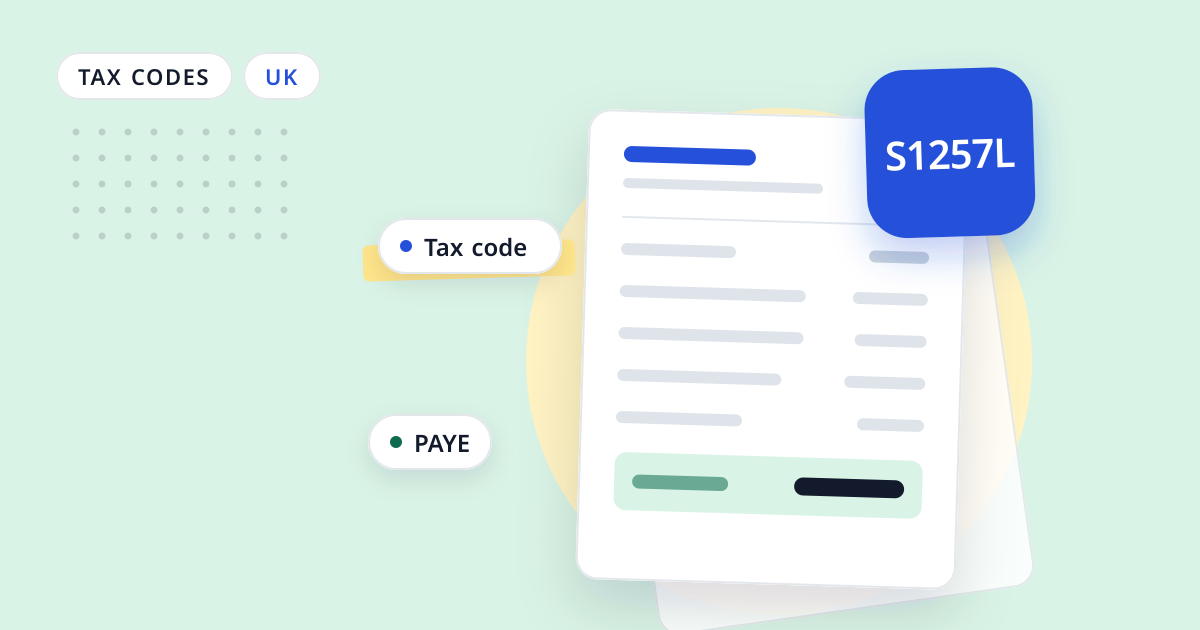
You pay Scottish Income Tax if you live in Scotland. HMRC puts an S at the start of your code, and your employer's payroll then uses Scotland's bands instead of England's. The 1257L part works exactly as it does elsewhere: £12,570 of tax-free pay a year, about £1,048 a month.
Where you work doesn't decide it; your main home does. Someone living in Glasgow and working for a London employer is on S1257L. GOV.UK says your main home is usually where you live and spend most of your time.
Scottish rates for 2026/27
| Band | Yearly income | Rate |
|---|---|---|
| Personal Allowance | Up to £12,570 | 0% |
| Starter | £12,571 to £16,537 | 19% |
| Basic | £16,538 to £29,526 | 20% |
| Intermediate | £29,527 to £43,662 | 21% |
| Higher | £43,663 to £75,000 | 42% |
| Advanced | £75,001 to £125,140 | 45% |
| Top | Over £125,140 | 48% |
National Insurance is UK-wide. A Scottish employee pays the same employee National Insurance as anyone else on the same pay.
How PAYE applies S1257L on a payslip
Payroll takes the tax-free pay for the period off the pay, then spreads Scotland's bands across the year the same way: each band's yearly width divided by 12 for monthly pay or 52 for weekly pay. Tax is cumulative, so each payslip looks at pay and tax since 6 April.
- Pay for month 1: £3,000.00.
- Less tax-free pay of £1,048.26 leaves £1,951.74, rounded down to £1,951.
- Starter rate, 19% on the first £330.58: £62.81.
- Basic rate, 20% on the next £1,082.42: £216.48.
- Intermediate rate, 21% on the remaining £538: £112.98.
- Income tax for the month: £392.27. National Insurance: £156.16.
How it compares with 1257L
| Monthly pay | S1257L (Scotland) | 1257L (England and NI) | Difference |
|---|---|---|---|
| £1,800 | £146.89 | £150.20 | £3.31 less in Scotland |
| £3,000 | £392.27 | £390.20 | £2.07 more in Scotland |
| £5,000 | £1,097.87 | £952.06 | £145.81 more in Scotland |
The 19% starter rate makes Scottish tax slightly lower on modest pay. The 21% and 42% rates make it higher further up. These figures come from PayDocs' 2026/27 rule set, which follows HMRC's PAYE specification.
What the employer does
- Use the code HMRC sends, with the S. Payroll software picks the Scottish bands from the prefix.
- If an employee tells you they've moved to or from Scotland, they need to update their address with HMRC. HMRC then sends you a new code; you don't add or remove the S yourself.
- When HMRC changes the code part-way through the year, the new rate is backdated to 6 April for the employee, and cumulative PAYE corrects the difference over the following payslips.
Questions
Is S1257L the right code if I live in Scotland?
For most Scottish taxpayers with one job or pension and no taxable benefits, yes. GOV.UK says your code will be S1257L if you pay Scottish Income Tax and get the standard £12,570 allowance.
Do I pay Scottish tax if I work in England but live in Scotland?
Yes. It depends on where your main home is, not where your employer is.
Does the S change National Insurance?
No. National Insurance rates and thresholds are the same across the UK.
Sources
- GOV.UK — Income Tax in Scotland
- GOV.UK — Tax codes: what your tax code means
- HMRC — Rates and thresholds for employers 2026 to 2027
- GOV.UK — Understanding your employees' tax codes: what the letters mean
- HMRC — Specification for PAYE Tax Table Routines, version 24.0
Official sources checked 4 October 2026. This guide explains how pay documents work; it is not tax or legal advice.